



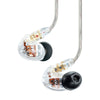

In-Ear Headphones
(26 products)
Backordered: Delivery time unknown 
External warehouse - Estimated delivery in 7-10 business days. 
External warehouse - Estimated delivery in 7-10 business days. 
External warehouse - Estimated delivery in 7-10 business days.  Save 21%In stock (only 2 pcs.) · Delivery time: 3-5 business days
 Save 40%
Tivoli Audio
Tivoli Audio GO! Fonico In-Ear Bluetooth Headphones
€38,95€64,95Unit price /Not availableIn stock (only 4 pcs.) · Delivery time: 3-5 business days
External warehouse - Estimated delivery in 5-6 business days. 
External warehouse - Estimated delivery in 11-14 business days. 
External warehouse - Estimated delivery in 5-6 business days. 
External warehouse - Estimated delivery in 7-12 business days. 
External warehouse - Estimated delivery in 5-6 business days. 
External warehouse - Estimated delivery in 6-10 business days. 
External warehouse - Estimated delivery in 6-10 business days. 
External warehouse - Estimated delivery in 5-6 business days. 
External warehouse - Estimated delivery in 5-6 business days. 
External warehouse - Estimated delivery in 6-10 business days. 
External warehouse - Estimated delivery in 6-10 business days. 
External warehouse - Estimated delivery in 7-12 business days. 
External warehouse - Estimated delivery in 5-6 business days. 
External warehouse - Estimated delivery in 5-6 business days. 
External warehouse - Estimated delivery in 5-6 business days. 
External warehouse - Estimated delivery in 5-6 business days. 
External warehouse - Estimated delivery in 5-6 business days. 
External warehouse - Estimated delivery in 11-14 business days.


In-Ear Headphones for Music, Training and Everyday Use
In-Ear Headphones sit directly in the ear and combine a compact design with effective passive noise isolation. They are easy to carry in a pocket or bag and can be used for music, podcasts, calls, training, transport and professional monitoring.
At SoundStoreXL you will find both wired and Wireless Headphones. The range includes classic earbuds with minijack, Bluetooth models, true wireless headphones and more specialised solutions for musicians and stage use.
What does in-ear mean?
In-ear means that the headphones are placed in or near the opening of the ear canal. They take up considerably less space than on-ear headphones and over-ear headphones, making them suitable for use on the go.
Many models come with ear tips in several sizes. The right size is important because the fit affects comfort, bass reproduction and isolation from the surroundings.
Advantages of In-Ear Headphones
- Compact size and low weight
- Easy to carry in a pocket or case
- Good passive isolation with the correct fit
- Suitable for music, podcasts and calls
- Available with both cable and Bluetooth
- Many models are suitable for training and movement
- Professional models can be used for stage monitoring
You can compare the design with other models in our complete selection of headphones.
Wired or wireless In-Ear Headphones?
Wired In-Ear Headphones
Wired models provide a direct connection without a battery, pairing or wireless latency. They are suitable for music players, computers, audio interfaces and other equipment with a headphone output.
Many models connect via a 3.5 mm minijack. If your device has a different connection, you can find relevant adapters under cables and connectors, minijack cables and headphone accessories.
Wireless In-Ear Headphones
Wireless Headphones typically connect via Bluetooth and provide greater freedom of movement. They are practical for phones, tablets and computers and often feature a microphone, control buttons and the ability to control music directly from the headphones.
Wireless models need to be charged, and battery life varies depending on volume, calls and features such as active noise cancellation.
True wireless or cable between the earbuds?
True wireless headphones have no cable between the right and left ear. They normally come with a charging case that both protects them and extends the total battery life.
Other wireless models have a short cable or neckband between the earbuds. This can make them harder to lose and be practical during training, transport or work.
In-Ear Headphones for Music
For music listening, you should consider the sound profile, fit and the type of music you listen to. Some models have pronounced bass reproduction, while others reproduce vocals and instruments more neutrally.
A tight fit normally provides fuller bass and better isolation. If the ear tips do not seal properly, the sound may seem thin, even if the headphones themselves are of good quality.
In-Ear Headphones for Training and Sport
For running, fitness and other movement, a stable fit is essential. Some models have ear wings, hooks or shaped housings that help keep them in place.
For training, you should consider, among other things:
- Secure and stable fit
- Low weight
- Sweat- or water-resistant construction
- Simple operation while moving
- Sufficient battery life
- A case that protects the headphones after use
Water resistance does not necessarily mean that the headphones can withstand being submerged. Always check the model’s specified IP rating and the manufacturer’s instructions.
In-Ear Headphones for Travel and Transport
The compact size makes in-ear models suitable for buses, trains and aeroplanes. A model with good passive isolation can reduce background noise, while active noise cancellation can particularly reduce consistent sounds from engines and ventilation.
For travel, long battery life, fast charging and a compact charging case are practical features. A transparency or ambient function can also make it easier to hear announcements and traffic without removing the headphones.
Active and Passive Noise Cancellation
Passive Noise Isolation
Passive isolation occurs when the ear tip seals tightly in the ear and physically dampens sound from the surroundings. The effect depends largely on the ear tip’s size, shape and material.
Active Noise Cancellation
Active noise cancellation, also called ANC, uses microphones and electronic processing to reduce background noise. The function is particularly effective against continuous sounds from transport, ventilation and engines.
ANC headphones should not be confused with approved earplugs and hearing protection for concerts, festivals or professional noisy environments.
Fit and Choosing Ear Tips
A correct fit is one of the most important factors with In-Ear Headphones. Most models come with silicone tips in several sizes, so you can find a seal that fits each ear.
It is not unusual to use different sizes in the right and left ear. The ear tip should sit securely without causing pain or unnecessarily strong pressure.
Silicone or Foam?
Silicone tips are easy to clean and normally last a long time. Memory foam can mould more precisely to the ear canal and provide tight isolation, but the material typically wears out faster.
Replace the ear tips if they become damaged, hard or no longer seal properly.
In-Ear Headphones with Microphone
Many In-Ear Headphones have a built-in microphone for phone calls and video meetings. Microphone quality varies between models and is affected, among other things, by wind, traffic and noisy office environments.
For professional voice recording, streaming or podcasting, a separate microphone will normally provide a better result. See our selection of podcast equipment, podcast microphones, microphone arms and pop filters.
Bluetooth, Codecs and Connection Stability
The Bluetooth version affects functionality, range and energy efficiency, but both the headphones and the connected device must support the relevant functions.
Codecs such as SBC, AAC, aptX and LDAC control how the sound is transmitted. However, the codec is only one part of sound quality. Drivers, tuning, fit and the original audio file also have a major impact.
Latency in gaming, Video and Music Production
Bluetooth can cause a slight delay between picture and sound. For ordinary music listening, this rarely has practical significance, but latency may be noticeable during gaming, video editing and live monitoring.
For gaming, a dedicated gaming headset with a USB receiver or cable may be a better choice. For recording and music production, wired studio headphones are normally recommended.
In-Ear Headphones for Musicians and Stage Use
Professional In-Ear Headphones are often used as part of an in-ear monitoring system. The musician receives an individual monitor mix directly in the ears instead of relying on traditional stage monitors.
This can provide better control over vocals, instruments and click track while also reducing the amount of sound on stage. In-ear monitoring can be used by singers, guitarists, keyboard players, drummers and other live performers.
A complete system typically consists of In-Ear Headphones, a transmitter, a bodypack receiver and a signal from a mixer or digital monitoring system.
In-Ear Headphones or In-Ear Monitoring?
Ordinary In-Ear Headphones are primarily developed for music, calls and everyday use. Professional in-ear monitors are developed for precise monitoring, a stable fit and high isolation on stage.
Some stage models have multiple drivers, with different frequency ranges distributed between separate units. This can provide greater detail and control, but the number of drivers alone does not indicate how well a model suits the individual musician.
In-Ear Headphones for DJ Use
Some DJs use in-ear monitors as an alternative to traditional DJ Headphones. This can provide high isolation and make it possible to mix with the cue and master signal directly in the ears.
However, this requires a workflow in which it is easy to control the cue/master balance on the DJ mixer. Ordinary Bluetooth headphones are not suitable for precise cueing because the wireless connection can cause latency.
Also see our selection of DJ Controllers, DJ Media Players and DJ Turntables.
In-Ear Headphones for Studio and Recording
Wired In-Ear Headphones can be used for recording and monitoring, especially when low weight and good isolation are important. For longer editing, mixing and mastering sessions, however, many choose larger over-ear models.
In the studio, the headphones can be connected to audio interfaces, a headphone amplifier or a studio monitor controller. The production should also be checked on studio monitors.
Battery Life and Charging Case
For true wireless models, battery life is often stated both for the headphones themselves and as a total battery life including the charging case.
Actual playback time is affected by volume, ANC, calls and temperature. Fast charging can be practical if the headphones are often used on the go.
How to Protect Your Hearing
In-Ear Headphones sit close to the eardrum, but it is primarily the volume and listening time that determine the strain. Avoid compensating for noisy surroundings by constantly turning the volume up.
A model with good isolation can make it easier to hear the music at a lower level. Take breaks during extended use and respond to signs such as ringing, discomfort or temporarily muffled hearing.
Cleaning and Maintenance
In-Ear Headphones should be cleaned regularly, as the ear tips and sound channels come into direct contact with the ear.
- Remove the ear tips and clean them according to the manufacturer’s instructions.
- Keep sound channels and grilles free of earwax and dust.
- Allow the parts to dry completely before mounting them again.
- Store the headphones in a case.
- Avoid moisture unless the model is approved for it.
- Carefully clean the charging contacts on true wireless models.
Brands in the Range
The collection includes, among others, In-Ear Headphones from Pioneer, Tivoli Audio and House of Marley, as well as other manufacturers focusing on everyday use, sport and wireless sound.
Pioneer
Pioneer has developed both wired and wireless in-ear models for music, sport and mobile use. The range extends from simple earbuds to Bluetooth models with a more stable sports design.
Tivoli Audio
Tivoli Audio combines wireless functionality with a simple design and solutions aimed at music listening and everyday use.
House of Marley
House of Marley offers compact earbuds with a focus on simple design and material choices that differ from traditional plastic models.
How to Choose the Right In-Ear Headphones
- For everyday use: Prioritise comfort, microphone and simple operation.
- For training: Look for a secure fit and sweat-resistant construction.
- For travel: Choose good isolation, ANC and long battery life.
- For music: Choose a sound profile and fit that suit your preferences.
- For calls: Check microphone quality and noise cancellation.
- For gaming: Pay attention to latency.
- For stage use: Choose professional in-ear monitors with a stable fit.
- For studio use: Consider a wired model without wireless latency.
FAQ about In-Ear Headphones
What is the difference between earbuds and In-Ear Headphones?
Earbuds often sit more loosely at the opening of the ear, while in-ear models typically use an ear tip that seals more closely in the ear canal. However, the terms are often used interchangeably.
Are In-Ear Headphones good for music?
Yes. A correct fit can provide good bass, clear detail and effective isolation. However, sound quality varies between models and price ranges.
Are In-Ear Headphones good for training?
Yes, especially models with a stable fit and sweat-resistant construction. Check the product’s IP rating if they are to be used in rain or during intensive training.
Why do my In-Ear Headphones keep falling out?
This is often caused by incorrectly sized ear tips or a shape that does not suit the ear. Try other sizes or a model with ear wings or hooks.
Can In-Ear Headphones damage hearing?
They do not damage hearing when used normally and responsibly. However, high volume over an extended period can strain hearing, regardless of which type of headphones you use.
Can Bluetooth headphones be used for gaming?
Yes, but ordinary Bluetooth can cause latency. For games where timing is important, a cable or dedicated wireless connection is often better.
Can ordinary In-Ear Headphones be used as stage monitors?
They can technically reproduce a monitor signal, but professional in-ear monitors normally provide better isolation, fit and reliability on stage.
How do you clean In-Ear Headphones?
Remove the ear tips, clean them carefully according to the manufacturer’s instructions, and keep the sound channels and charging contacts free of dirt.
Buy In-Ear Headphones at SoundStoreXL
In-Ear Headphones are a flexible choice for music, calls, sport, transport and professional monitoring. They take up little space, are easy to carry and are available in both simple wired and advanced wireless versions.
Start by considering fit, connection, battery life, microphone and intended use. This makes it easier to find a model that suits your ears, your equipment and your everyday life.

Get exclusive deals and member discounts
Join Club SoundStoreXL for free and get more out of every order.
- 100-day right of return for members (normally 30 days)
- Members-only discounts
- Priority order handling
- Early VIP access to select campaigns
- Important product news and deals
- Exclusive events