


Stage Monitors
(2 products)
External warehouse – Estimated delivery in 11–16 business days. 
Made to order. Estimated delivery in 6–10 business days.


Read more Stage Monitors
Read more Stage Monitors
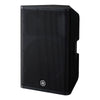
A stage monitor is, in short, a speaker that points towards the people on stage, so they can better hear the sound being sent out to the audience.
Stage Monitor – Hear Yourself Clearly and Perform More Safely Live
A stage monitor is crucial for any live performance. Whether you're a singer, guitarist, drummer, DJ, or play in a band, it's impossible to deliver a stable performance if you can't hear yourself and the rest of the ensemble clearly. The right stage monitor provides clear sound, controlled volume, and precise reproduction – so you can perform more safely, sing more accurately, and respond faster to what's happening on stage.
With us, you'll find stage monitors for both small venues, mobile setups, churches, clubs, and larger concert stages – from compact active wedges to powerful professional solutions with high SPL and precise dispersion.
Why a Good Stage Monitor Changes Your Performance
Many mistakes on stage are due to poor monitor sound – not lack of skill. If you can't hear your voice properly, you'll often oversing. If you can't hear your guitar or your click, timing becomes uncertain. A correctly chosen stage monitor gives you control, confidence, and better dynamics because you perform based on what you actually hear – not what you hope is happening.
How to Choose the Right Stage Monitor
There are four crucial factors:
1. Active or Passive
Active stage monitors have a built-in amplifier and are the most flexible solution for modern setups. Passive ones require an external amplifier but can be advantageous in fixed installations. Most often, a stage monitor is an active stage monitor – meaning with a built-in amplifier. This makes the monitor much easier for the band and musician to set up and adjust the sound.
Just like "regular" active PA speakers, an active stage monitor is preferable.
2. Size and Power
10” and 12” units are typically sufficient for vocals and smaller stages. 15” provides more bass and higher output, which may be necessary for drums or larger venues.
3. Dispersion and Placement
The monitor's dispersion angle determines how widely the sound is distributed. Correct placement reduces feedback and provides cleaner monitor sound.
4. Frequency Response
Vocal-focused monitors prioritize clear midrange. Instrument monitors may require more bass and headroom.
Stage Monitor for Vocals
Singers need clear midrange and feedback control. A monitor with good clarity and controlled treble makes it easier to maintain intonation and avoid straining the voice. Many choose wedges with focused dispersion to minimize microphone feedback.
Stage Monitor for Band and Instruments
Guitarists, keyboard players, and bassists need monitors with more headroom and a wider frequency range. Drummers may need higher SPL to hear clicks or mixes clearly over acoustic sound.
Wedge or FRFR?
Classic wedge monitors are angled towards the musician and are standard on most stages. FRFR (Full Range Flat Response) monitors are often used with modelers and digital guitar rigs, where neutral reproduction is important for accurate tone.
Feedback and Placement – How to Achieve Cleaner Monitor Sound
Place the monitor so the microphone's "dead angle" faces the speaker. Avoid pointing microphones directly into the monitor's tweeter. Use EQ to remove problematic frequencies instead of just turning down the volume.
Stage Monitor vs. In-Ear Monitor
Traditional stage monitors provide a physical feel and "air" on stage. In-ear monitor systems offer more isolated and controlled sound. Many professionals combine both solutions depending on the venue and needs.
When Should You Upgrade Your Stage Monitor?
If you're constantly struggling with feedback, lack headroom, or can't hear yourself clearly at moderate levels, it's often the monitor – not the mix – that's the limitation.
Conclusion – The Right Stage Monitor Provides Better Live Performance
A good stage monitor is not just a speaker on the floor – it's your most important tool for delivering a stable and professional live experience. With the correct choice of size, power, and dispersion, you get clearer sound, less feedback, and much better control over your performance.
What is the Difference Between Stage Monitors and the Front PA System
As mentioned, stage monitors point towards the artists so they can hear themselves and/or their own instrument. For example, it could be the musician needing to hear their own guitar, or the DJ needing to hear their mix. Stage monitors therefore often run via their own amplifier and equalizer and receive input from a secondary mixer, where the focus is typically on vocals and acoustic instruments. The collection of stage monitors used during, for example, a concert is called a stage monitor system. Stage monitors are often placed lengthwise on the stage so they can be close to the artists without being in the way.
