


Guitar Cables – how to choose the right cable for your guitars
A good guitar cable is just as important to your sound as the guitars itself and the amplifier. Whether you play Electric Guitar, acoustic guitars with a pickup or bass, a stable, low-noise and durable guitar cable is crucial for your tone to come through cleanly. In this category you will find a wide selection of guitars cables from, among others, Perfex, Fender, Ernie Ball, Roland, Boss, Neutrik, Adam Hall and Grooveland – all developed for musicians who want reliable connections in the rehearsal room, the studio and on stage.
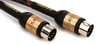
At SoundStoreXL, we have put together the range so you can find both a simple, affordable guitars cable for home use and more exclusive instrument cables with, for example, 24K gold-plated plugs, spiral shielding and a fabric jacket for professional use. Here you get an overview of types of guitars cables, lengths, plug types and which solutions best suit your specific setup.
How to choose the right guitar cable for your setup
When choosing a guitars cable, it’s about matching length, quality, plug type and flexibility to how you play. This makes it easier to find the best guitars cable for Electric Guitar, acoustic guitars or bass in practice.
Start by considering how you typically use your guitars:
- If you mostly play at home close to your amplifier, a 3 metre jack cable is often enough.
- If you play in a rehearsal room or on smaller stages, a 4.5–6 metre guitars cable is a good flexible choice.
- For larger stages, or if you move around a lot, 7.5–9 metres or a coiled cable can give extra freedom.
- If you have a pedalboard, you should combine a solid instrument cable for the guitars with short patch cables guitars between the pedals.
Next, you need to decide whether you want straight jack plugs at both ends, an angled jack plug at one end, or angled at both ends. An angled jack cable, such as Perfex Angled Jack Cables or many of the Ernie Ball models, is especially practical directly in the guitars, where it reduces the risk of bumping the plug.
Types of guitars cables: What are the different cables called?
Guitars cables cover several related cable types, each with its own function in a modern guitars setup. Here is an overview of the most important types you will find at SoundStoreXL.
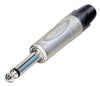
- Instrument cable / guitar cable (6.3 mm mono jack to 6.3 mm mono jack)
- Angled jack cable (straight/angled or angled/angled for guitars and pedalboards)
- Patch cables guitars (short cables for pedals and tight connections)
- Y-split and stereo jack cables (for special connections and dual signals)
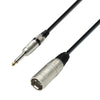
- Minijack to XLR or jack (for connecting guitar-related equipment to an audio interface, mixer or PA system)
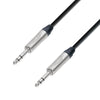
The classic Guitars cable is an instrument cable with 6.3 mm mono jack at both ends, such as the Perfex Jack Cable series, Fender Professional and Roland Nickel or Gold instrument cables. They are used to connect guitar or bass to an amplifier, DI box or the first pedal on the pedalboard.
Patch cables for guitar, such as Ernie Ball 6221, 6222, 6224 and the short Neutrik and Adam Hall patch cables, are short cables with right-angle plugs that create compact and secure connections between pedals. They are typically available in lengths from approx. 7.5 cm to 60 cm and are designed for pedalboards where space and neatness matter.
Plugs and connections – straight jack, right-angle jack, stereo and minijack
The choice of plugs on your Guitars cable matters both practically and sonically. In this category you’ll find several variants that cover typical needs:
- Straight jack to straight jack: The standard solution for many setups, e.g. Perfex Jack Cable, Fender Original and several Ernie Ball instrument cables.
- Straight jack to right-angle jack: Very common for guitar, where the right-angle plug goes into the guitar and the straight plug goes into a pedal or amplifier. Examples include Fender Deluxe and Professional right-angle plug models, Ernie Ball 6062/6063/6066/6080/6082/6083/6085/6086 and Boss BIC-15A.
- Right-angle jack to right-angle jack: Ideal for pedalboards and tight setups. You’ll find, among others, Boss BIC-3AA and BIC-1AA as well as Neutrik patch cables with right-angle jack at both ends.
- Stereo jack and Y-split: Roland Black Stereo Jack Cable and Roland Y-split cable stereo to 2x mono jack, used for special configurations, e.g. stereo effects, keyboards or dual-output systems.
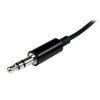
- Minijack to XLR: Perfex minijack 3.5 mm TRS male to 2x XLR female in multiple lengths, typically used between consumer electronics and professional audio equipment.
Most Guitars use a mono jack plug, so you typically need to choose a 6.3 mm mono jack to mono jack cable. Stereo jack and minijack cables make sense when you route your sound onwards to an audio interface, mixer, speakers or other audio sources.
How do Guitar Cables affect your sound?
A good Guitars cable ensures that your Guitars sound reaches its destination as unchanged and noise-free as possible. The difference isn’t about magical improvements, but about signal loss, noise and durability. When you choose among the best Guitars cables in the range, there are three things in particular that affect the sound: shielding, cable construction and plug quality.
Professional cables from, for example, the Roland Gold and Nickel series, Boss BIC, Neutrik and Ernie Ball use high-density spiral copper shielding and oxygen-free copper conductors. This means the cable provides better protection against hum, radio interference and ambient noise, while preserving the full frequency range – especially the treble, which can easily be lost in poor-quality or very long cables.
Shielded vs. unshielded cables – why shielding matters for Guitars
Guitars and bass guitars have relatively weak signals, which is why it’s crucial to use shielded cables. A shielded Guitars cable has a copper or spiral shield around the conductor, protecting against induced noise.
- Shielded instrument cables: Used between Guitars, pedals, DI box and amplifier. Examples include instrument cables from Perfex, Ernie Ball, Fender, Roland, Boss, Neutrik and Adam Hall in this category.
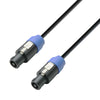
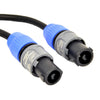
- Unshielded speaker cables: Typically used between an amplifier and a speaker cabinet, where the signal is powerful. Here you’ll find, for example, Ernie Ball 6071 and 6072, which are designed as speaker cables.
If you mistakenly use a speaker cable as a Guitars cable, you risk noise and poor sound, while an instrument cable used as a speaker cable can become overloaded and get damaged. That’s why it’s important to choose the right type of cable for the right job.
Length of Guitar Cables – how long a cable should you choose?
The length of your Guitars cable has a direct impact on both comfort and sound quality. The longer the cable, the greater the electrical capacitance, which can reduce treble and make the sound darker. With the quality cables you’ll find at SoundStoreXL, this only becomes an issue at very long lengths, but it’s still worth considering.
- 1–3 metres: Ideal for a home studio, close to an amplifier, or for connections on a pedalboard. Examples include many 3 m models from Perfex, Fender Original, Fender Deluxe, Fender Professional, Ernie Ball 6080/6077/6081 and Boss BIC-3AA.
- 4.5–6 metres: A good all-round length for rehearsal room and stage use when you want freedom of movement. Examples include Perfex Jack Cable 6 m, Perfex Angle Jack 6 m and Boss BIC-15A at 4.5 m.
- 7.5–9 metres: For larger stages and guitarists who move around a lot. Ernie Ball 6058, 6062, 6063, 6066 and the 6044 9 m coiled cable are examples that provide extra reach.
If you mostly play at home, a shorter Guitars cable can give you a cleaner sound and less cable clutter. If you play live, you can safely choose a longer quality cable or a coiled cable that automatically retracts and takes up less space on stage.
The right cable for Electric Guitar, acoustic Guitars and amplifier
Although many guitar cables can technically be used for multiple purposes, there are some practical differences that make it easier to choose the right option for Electric Guitar, acoustic guitar and amplifier.
- Electric Guitar and bass: A flexible, shielded instrument cable with good strain relief at the connector is the obvious choice. Many choose an angled jack at the guitar and a straight connector into a pedal or amplifier. Cables such as Fender Deluxe and Professional, Ernie Ball instrument cables, Roland Gold/Nickel, the Boss BIC series and Neutrik Jack Cables are great choices for serious Electric Guitar players and bassists.
- Acoustic guitar with pickup: Here the requirements are largely the same as for Electric Guitar. A low-noise, flexible guitar cable with good shielding is important, especially if you use longer cables for stage use. The same models as for Electric Guitar typically work excellently.
- Between amplifier and cabinet: Here you use speaker cables, such as Ernie Ball 6071 and 6072. Choose a cable with sufficient thickness and length, but avoid unnecessarily long runs.
If you’re starting out on guitar, a budget-friendly and robust Perfex guitar cable can be a great first choice, while more experienced guitarists often choose Ernie Ball, Fender, Roland, Neutrik or Adam Hall for even better durability and lower noise.
Patch cables for guitar and pedalboard solutions
If you have a pedalboard, patch cables are an important part of your setup. The short cables ensure your pedals sit close together and stable, while keeping the signal between pedals as short and clean as possible.
- Single patch cable: Ernie Ball 6225 (7.5 cm), 6226 (15 cm) and 6228 (61 cm), plus various Neutrik and Adam Hall patch cables with angled jack at both ends.
- Patch cable 3-pack: Ernie Ball 6221 (3 x 15 cm) and 6222 (3 x 30 cm), ideal if you’re building a pedalboard from scratch.
- Patch cable starter pack: Ernie Ball 6224, with multiple lengths in the same pack (7.5–60 cm), so you can adapt to different pedal distances.
Many of the patch cables feature a flat design and dual-shield construction, providing both space saving and low noise. Angled connectors make it easy to keep cable routing tight and organised, which also reduces the risk of stepping on plugs and causing dropouts mid-song.
Materials, design and durability – cloth cables, tweed and colours
Beyond sound quality and connector type, materials and design play a role in both durability and your on-stage look. In this category you’ll find several guitar cables with cloth and tweed designs.
- Cloth and tweed cables: Perfex Jack Cables in cloth, Grooveland Tweed angled guitar cable and Fender Deluxe cables in Tweed and Black Tweed provide a classic, vintage-inspired look and extra durability.
- Braided surface: Many Ernie Ball cables (e.g. 6058, 6062, 6063, 6066, 6077, 6078, 6080, 6082, 6083, 6085, 6086) have a braided surface design that reduces tangling and knots and increases lifespan.
- Colours for the stage: Ernie Ball instrument cables are available in several colours such as yellow, pink, green and combinations, so you can colour-code your setup or match your style.
A coloured or tweed guitar cable makes it easier to keep track of what goes where, especially in larger rigs. At the same time, a quality cable with a strong outer jacket and bend relief can withstand far more daily use, packing and unpacking, and transport.
Durability, care and typical faults with guitar cables
Even the best guitar cables wear over time, but with a little care you can significantly extend their lifespan. Many faults with guitar cables occur at the plug or due to improper storage, not in the conductor itself.
- Avoid sharp kinks: Coil the cable loosely in large loops instead of wrapping it tightly around your elbow or the amplifier.
- Pull the plug \u2013 not the cable: When unplugging the cable from the guitar or amplifier, grip the plug itself instead of yanking the cable.
- Use a cable tie: Many cables come with a Velcro strap or cable tie, e.g. Perfex Angled Jack Cables and Grooveland Tweed, so you can keep things organised in your bag.
- Avoid stepping on plugs: Especially for stage use, where an angled plug can reduce the risk of impact and breakage.
Typical signs that a guitar cable should be replaced are crackling noises, signal dropouts when you move the cable, or if the jacket is clearly damaged. Pro series cables from e.g. Roland, Boss, Neutrik, Fender and Ernie Ball are built with better strain relief and materials designed to prevent exactly these issues, but no cable lasts forever.
Mini jack, adapters and special cable solutions
Some guitar setups require more than a classic jack-to-jack guitar cable. If you need to connect a pedalboard, practice amp, audio interface or other electronics, special cable types and adapters can be the solution.
- Minijack to XLR: Perfex minijack 3.5 mm TRS male to 2x XLR female (1.3 m, 3 m, 6 m) makes it easy to connect, for example, a laptop or another minijack audio source to a professional XLR-based sound system.
- Stereo jack and Y-split: Roland Black stereo jack cable and Roland Y-split cable stereo to 2x mono jack are used when you want to split or combine signals, e.g. from multi-effects, keyboards or other devices.
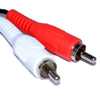
- 2x jack to 2x jack: Cables such as 2x JACK TS to 2x JACK TS in multiple lengths are practical for stereo setups or dual connections.
Although these are not classic guitars cables directly between guitar and amplifier, they are often an important part of the overall setup for guitarists working with studios, audio interfaces and advanced rigs.
Frequently asked questions about guitar cables
When you search for guitar cables, related questions often come up about both equipment and getting started with guitar. Here you’ll find answers to some of the typical questions we receive.
What are the different cables I need for guitar called?
For the guitar itself, you use an instrument cable with 6.3 mm mono jack at both ends—often called a guitar cable or jack cable. Between pedals, you use short guitar patch cables with angled plugs at both ends. Between the amplifier and speaker cabinet, you use speaker cables, for example selected Ernie Ball models. If you need to connect an audio interface, mixer, or other equipment, you can use special stereo, Y-split, or minijack to XLR cables, which you can also find in this category.
What does a good guitar cost – and how much should I spend on a guitar cable?
A good beginner guitar is often mid-range in terms of price, but your investment in guitar cables doesn’t have to match the price of the guitar. As a rule of thumb, it’s a good idea to choose a solid mid-level cable from, for example, Perfex or Adam Hall for beginners, and upgrade to Fender, Ernie Ball, Roland, Boss or Neutrik if you play a lot live or in the studio. A quality guitar cable lasts again and again, so the price difference often pays off in the long run.
Can anyone learn to play guitar – and which cable is best for beginners?
In principle, anyone can learn to play guitar with a bit of patience and practice. If you’re a beginner, the most important thing is to get a stable, reliable guitar cable that doesn’t create noise and can withstand daily use. A 3 or 6 metre Perfex guitar cable, or a similar instrument cable from Adam Hall, is a good place to start. As your setup grows, you can always upgrade to more advanced cables and patch solutions for your pedalboard.
How many guitar cables do I need for a typical setup?
For a very simple setup with guitar straight into an amplifier, you only need one guitar cable. If you have a pedalboard, you’ll need one longer instrument cable from the guitar to the first pedal, one from the last pedal to the amplifier, and several short patch cables between the pedals. If you use external effects in an effects loop, a stereo setup, or an audio interface, you may need additional instrument cables or special cables such as Y-split and minijack to XLR.
Popular brands and series of guitar cables at SoundStoreXL
To make it easier to choose the best guitar cable for your needs, you can start by looking at the most popular brands in the category. Each brand has its strengths and typical use cases.
- Perfex: Affordable, solid guitar cables for everyday use, incl. fabric cables and angled jack models.
- Fender: Original, Professional and Deluxe instrument cables in several colours and tweed design – perfect for guitarists who want to match their Fender setup or go for a classic look and high quality.
- Ernie Ball: A wide range of instrument cables and patch cables with braided outer jacket, many colours and lengths, incl. a coiled cable for flexible stage use.
- Roland and Boss: Professional instrument cables with heavy shielding, oxygen-free copper conductor and often a lifetime warranty. Especially well suited for demanding live and studio use.
- Neutrik: Instrument cables built with Neutrik connectors, the industry standard for robustness and reliability, plus short patch cables for pedalboards.
- Adam Hall: Instrument and patch cables in the 4 Star series, combining a sensible price with good quality for rehearsal rooms and smaller stages.
- Grooveland: Tweed angled guitar cable with fabric sleeve and angled jack, for those who want both style and function in one cable.
By choosing a cable brand that matches both your playing style and your budget, you get a more cohesive setup and fewer cables that need replacing. Many people, for example, combine Ernie Ball patch cables with a longer Fender or Roland guitar cable from the guitar to get the best of both worlds.
Buy your guitar cables at SoundStoreXL
Whether you’re looking for your first guitar cable for a beginner guitar or want to upgrade your professional pedalboard with top-quality patch cables, you’ll find a wide selection at SoundStoreXL. Our range of guitar cables spans from affordable standard cables to premium instrument cables with advanced shielding, a fabric sleeve and gold-plated connectors.
Here you can gather all the cables you need in one go: a guitar cable from guitar to pedal or amplifier, patch cables for your pedalboard, speaker cables between amplifier and cabinet, as well as mini-jack and Y-split cables for special setups. That way you get a clear, low-noise and reliable setup that works every time you power up.
Feel free to use this guide’s recommendations on length, connector type, brands and cable types when choosing from the range. If you’re unsure which guitar cable best suits your guitars and amplifier, you can start with the tried-and-tested series from Perfex, Fender, Ernie Ball, Roland, Boss, Neutrik, Adam Hall and Grooveland, and choose length and connectors to match your needs.
Buy your guitar cables at SoundStoreXL – a 100% Danish retailer.
